Peacock Feathers Unfold

Caleb Ryan
| 20-01-2026
 · Animal Team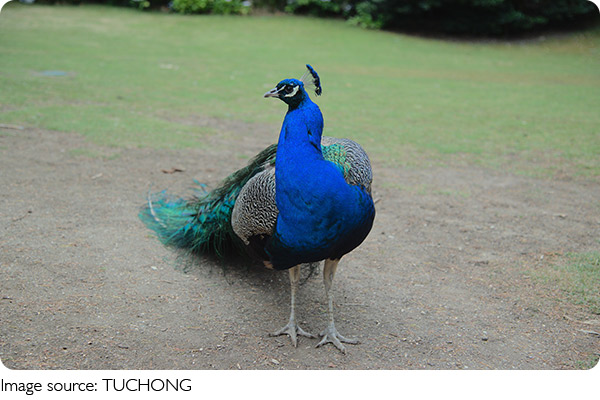
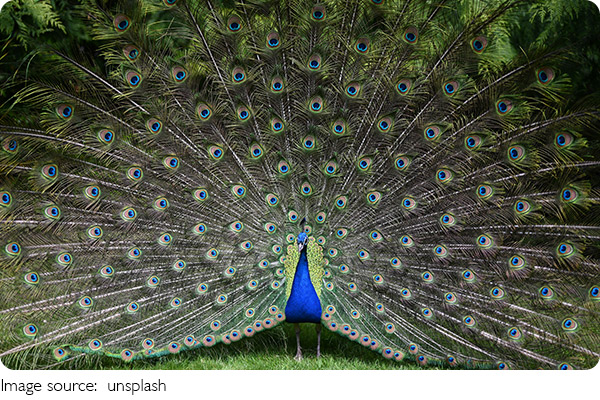
You may remember the first time you saw a peacock open its tail. The explosion of shimmering greens and blues looks almost unreal, like a painting that suddenly came alive.
Children gasp, grown-ups instinctively reach for cameras, and for a moment everyone falls quiet. But what makes those feathers so breathtaking, and why would nature design something so extravagant?
The Science Behind the Colors
It's tempting to think peacock feathers are simply colored by pigments, like paint on a canvas. In reality, the magic comes from structure rather than dye. Each feather contains microscopic layers that bend and scatter light, producing the iridescent glow we see. This effect, called structural coloration, is the same trick that gives butterfly wings their shimmer or hummingbird throats their sparkle.
The “eyes” in the peacock's tail, those round patterns that seem to stare back at you, are built from these layered structures too. What's astonishing is the precision—slight shifts in spacing can change a feather from green to blue to gold. It's like nature figured out nanotechnology long before humans ever did.
The Purpose of the Display
The beauty isn't just for show—it has a purpose. Male peacocks use their tails to impress potential mates. When they fan their feathers and vibrate them in a subtle shake, the colors flash in waves, creating a moving, shimmering display. To a female, this isn't just eye candy. It's a signal of health, strength, and good genes.
Why? Because carrying such an oversized tail is costly. It makes flying harder and requires extra energy to maintain. A male who still manages to survive and thrive with this burden is essentially saying, “Look how strong I am—I can handle this handicap.” In evolutionary terms, it's a powerful message.
Lessons Hidden in Feathers
When you look closely at peacock plumage, there are lessons tucked inside those colors:
1. Beauty has a function: In nature, striking patterns aren't just decoration—they often serve survival or reproduction.
2. Cost signals strength: Carrying a big, flashy trait can show resilience, because only the healthiest individuals can afford it.
3. Complexity emerges simply: The microscopic structures that bend light are incredibly simple, yet together they create an effect beyond imagination.
These insights stretch beyond biology. They remind us that what seems purely ornamental often has deep meaning, and that strength sometimes reveals itself through extravagance.
More Than Meets the Eye
Peacocks also use their tails as social tools. When a group of males displays together, they sometimes synchronize their movements, like a dance troupe performing in unison. This collective rhythm can amplify the spectacle, making the colors ripple like waves across a living canvas.
And for predators, the giant fan of eyespots can act as a defense. A sudden flare of feathers makes the bird look much larger, and the dozens of “eyes” may confuse an attacker long enough for the peacock to escape. So even though the feathers are mostly for attraction, they occasionally double as a shield.
A Final Reflection
The next time you see a peacock, pause for more than just a photo. Think of the tiny light-bending structures that create those impossible colors. Think of the evolutionary risk of carrying such a heavy, costly tail. And think of how something so dazzling is also practical—part love song, part warning, part survival strategy.
Nature doesn't create beauty without purpose. In the peacock's plumage, we see artwork that is both breathtaking and deeply functional. And perhaps that's the most striking lesson of all: beauty and utility don't have to live apart—they can shimmer together, feather by feather.